The AMAZONS
|
|
Characteristics of Amazons
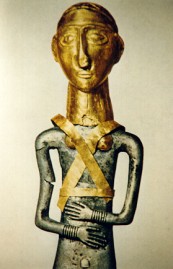
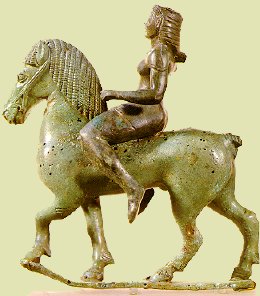
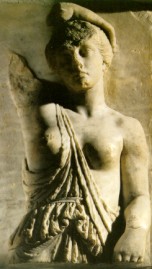
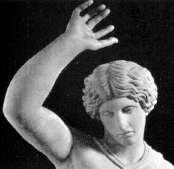
How did the ancient Greeks see the Amazons? There is a lot of literature concerning the Amazons and there are numerous pictures of Amazons in Greek art, mostly vase-painting and sculpture. ==> Earliest Amazon picture |
||
|
Amazons at the river Thermodon in northern Turkey
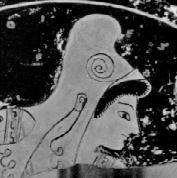
It has always been very clear to the ancient Greeks, where these famous Amazons once really had lived. Their home had been at the mouth of the river Thermodon in Northern Turkey. This localization is so definite that even now the river bears a Turkish name which leaves no doubt about its identity. Today the river is called Terme Çay. Çay is the Turkish name for river. |
||
|
Amazons of Lemnos
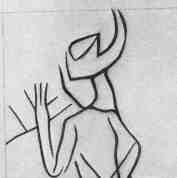
In ancient tradition the island Lemnos (also Limnos) was much connected with the Amazons. The ancients called this island «dominated by women».
On the trail of the Lemnian Amazons
Samothrace - Sacred island of the »Great Goddess«
|
||
|
Amazons from Libya
The BERBERS - Ancient African people with woman-focused culture
In Search of the Libyan Amazons' Homeland
|
||
|
|||
| B o o k s | |
|
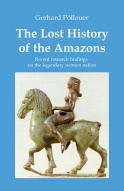
Gerhard Pöllauer: The Lost History of the Amazons Recent research findings on the legendary women nation ISBN: 978-1-4461-9305-1; Paperback, 148 pages, 87 black-and-white pictures, 3 illustrations Price: $17.48
This book focuses on the numerous traces of the Amazons.
It reports on latest findings and investigation in the legendary homeland of the Amazons at the
river Thermodon and on the Amazon island Lemnos. |
|
|
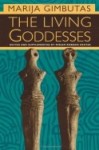
Marija Gimbutas, The Living Goddesses
It is astonishing that Gimbutas' key assumption that there existed egalitarian societies prior to the invasion of patriarchal Indo-European peoples in Europe is so much criticized and controverted by scholarly circles. Actually, her intriguing findings seem plausible, the numerous pictures in her books make everything very logical. Marija Gimbutas (1921 - 1994) was a serious and profound scientist who dedicated nearly her whole life to archaeological research. She was professor of archaeology at UCLA (University of California, Los Angeles) from 1963 to 1989, and directed major excavations of Neolithic sites in southeastern Europe. She had deep knowledge of archaeology but also of linguistics, ethnology and history of religion. Her theories are well thought out, clearly presented and thoroughly explained. |
|
|
Gerhard Pöllauer, Geheimnisvolles Lemnos. Die von Frauen beherrschte Insel
(Mysterious Lemnos. Island dominated by women) ISBN: 978-3-902096-77-7; Paperback, 128 pages, 97 black-and-white pictures, 3 color photos, 1 map Price: EUR 13.00
The rather unknown North Aegean island Lemnos amazes with its great prehistoric past.
About 5000 years ago there existed a highly-developed civilization which created imposing cities,
mighty rock buildings and impressive sanctuaries on this Greek island. The discovery of Poliochni was sensational.
Because of its largeness and refinement this Bronze Age settlement is regarded as the most ancient city of Europe.
Also the discoveries at Myrina in the west and Hephaistia in the north witness the island's
prehistoric importance. Presumably there was a further city in the Northeast - Chryse, which was sunken under the sea.
|
|
|
Johann Jakob Bachofen: Myth, Religion and Mother Right The very first scientist, who most profoundly proved that there had existed an age when women dominated, was the Swiss Johann Jakob Bachofen. You should read his well-founded theories in the book: Myth, Religion and Mother Right | |
|
Elaine Morgan: The Descent of Woman This pioneering work, first published in 1972 and revised in 1985, was the first to argue, intelligently and irrefutably, the equal role of women in human evolution. It created a worldwide furore and became a rallying point for women everywhere. The book's influence has been profound and lasting. It remains the key book in any discussion of women's place in society. |
|
|
Robert Graves: The Greek Myths This book presents the Greek myths in detail, and it doesn't neglect matriarchal aspects. If you are interested in matriarchal religion of the Celts, see his book: The White Goddess |
|
|
Matriarchy today
==> The Moso in South China
At last there is an amazing detail: In the language of the Moso the word »Ama« has the meaning »Mother«. This is a striking analogy to the name of the warlike Amazons. Well-fitting to this the Berbers in North Africa, which had been matriarchal in the past, call themselves Amazigh in their own language. Because of this we reason that the very ancient word Ama has the meaning »Mother« in its narrow sense. In the figurative sense it stands for »Matriarchal Culture«.
==> The Minangkabau people of West Sumatra
|
|
Updated: November 21, 2025
Diese Seite gibt es auch auf deutsch.
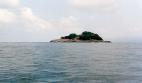 |
Giresun Adasi Project | |
|
|
|
|